
Chapter 1
Chapter 1: The Cold Bench
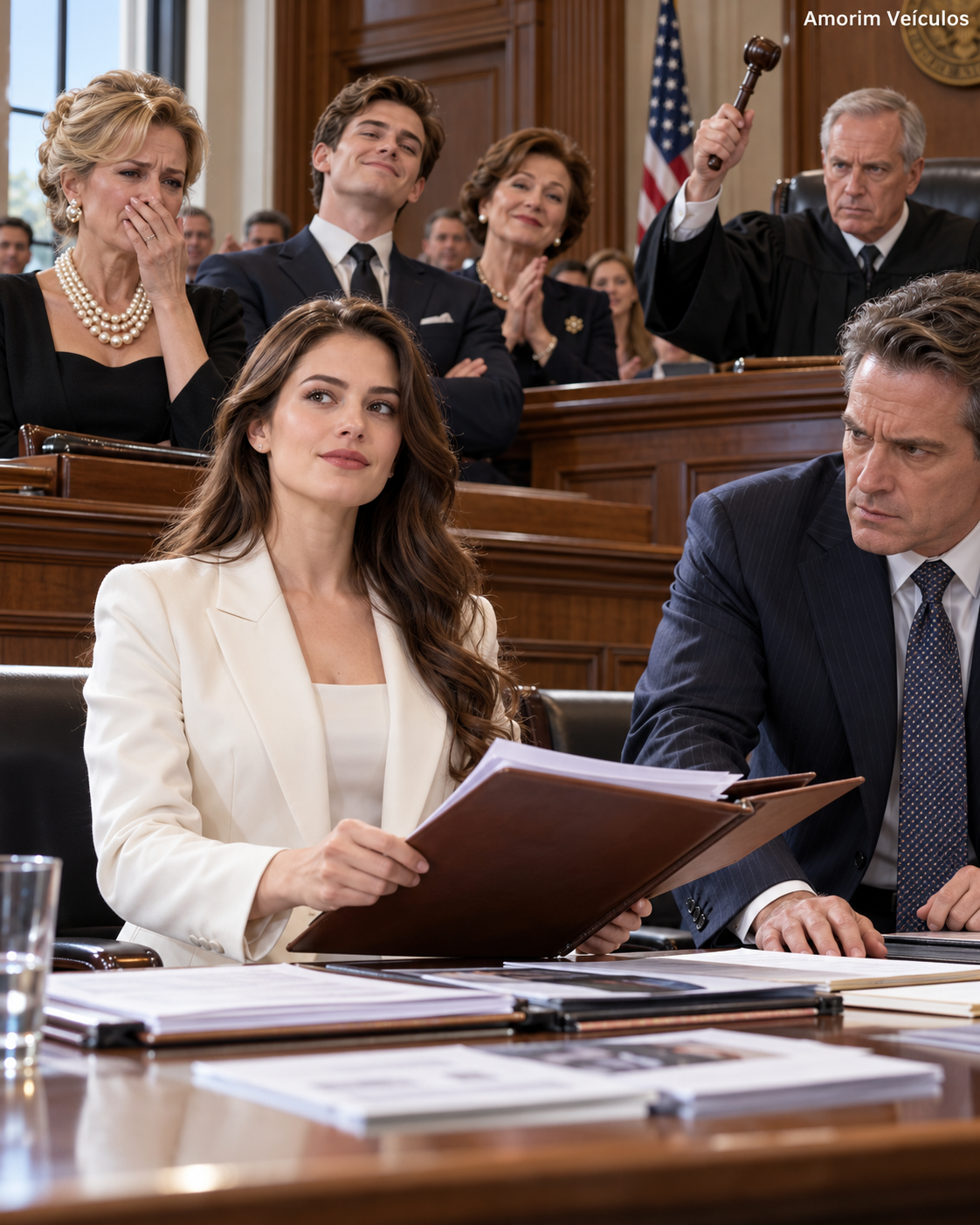
The gavel hovered in the air like a butcher’s blade, poised to sever the last remaining link to my childhood.
“The will is clear,” declared Mr. Vance, his voice carrying the oily smoothness of a seasoned corporate attorney who measured truth in billable hours. “She gets nothing.”
Judge Harrison nodded, his expression unreadable beneath his thick white brows. He glanced at me once—a brief, pitying look reserved for those who show up to a knife fight carrying nothing but empty hands—and began to lower his hand.
Behind me, my family clapped.
Actually clapped. In a solemn, wood-paneled courtroom in downtown Chicago.
It was a soft, rhythmic patter of manicured palms, but in the suffocating silence of Courtroom 402, it sounded like gunfire. My stepmother, Elaine Whitman, pressed a delicate lace handkerchief to her lips, feigning tears of grief, but the sharp tilt of her chin betrayed the smug smile beneath her fingers. Clasped around her neck was the three-strand South Sea pearl necklace that had belonged to my late mother—a piece of jewelry she had pointedly chosen to wear today like a trophy from a conquered kingdom.
Beside her, my half-brother, Lucas, leaned back against the polished oak bench, his arms stretched wide, a smirk plastered across his face. He looked at me with the casual disdain of a man who believed he had personally erased me from the fabric of reality. Across the aisle, my aunt leaned toward her husband and whispered, “Finally,” just loud enough for the sound to carry across the hardwood floor.
I stood alone at the plaintiff’s table, wearing a simple tailored charcoal suit, clutching a thin, weathered brown leather folder against my ribcage.
No one sat behind me. There had never been a side for me.
My father, Richard Whitman, had passed away three months ago. To the press and the financial elite, he was a titan—a visionary hotel developer, a generous philanthropist, a man whose name was etched in brass plaques across hospital wings, university libraries, and soaring glass skyscrapers from Manhattan to Miami.
To me, he was simply the man who went quiet after my mother, Eleanor, died of cancer when I was twelve.
He remarried within nine months. Elaine moved into our estate on Lake Shore Drive with her eight-year-old son, Lucas, and almost overnight, the geography of my life shifted. I was quietly relocated from the grand second-floor master suite to the small guest room at the end of the north wing—the one used for storing extra linens and out-of-season luggage. Elaine took to referring to me as “the reminder” when she thought I wasn’t listening. Lucas broke my mother’s hand-painted porcelain music box, threw it in the trash, and told my father I had smashed it in a fit of rage. When I cried, my father didn’t scold me; he simply turned his back and walked into his study, closing the mahogany door between us.