
Chapter 1
Chapter 1: The Weight of Unseen Stars
My father possessed a laugh that did not merely occupy a room; it colonized it. It was a baritone rumble honed by forty years of boardroom acquisitions, municipal zoning disputes, and political fundraisers—an expansive, theatrical sound designed to convince everyone within earshot that he had just bestowed upon them an intimate favor.
“And this,” Roderick Dunar declared, his manicured fingers barely grazing the fabric of my shoulder before casually falling away, “is my younger daughter. A bit of an odd duck, frankly. Wanders off, keeps to the margins. But she insisted on flying in for the celebration, so we made room at the table.”
A polite, syrupy titter rippled across the velvet and marble of the grand parlor. It was that particular vintage of Southern country-club laughter: polished, harmless on the surface, yet razor-sharp at the edges.
I did not flinch. Decades inside flight debriefing bunkers and joint command centers teach an officer how to keep the blood from rushing to one’s cheeks. Instead, I observed the room with steady detachment. The Belle Meade estate smelled precisely as it had throughout my childhood: expensive beeswax, forced white lilies, and the bitter trace of bourbon evaporating from cut crystal. Every antique credenza, every heavy silk drapery, and every warm recessed light fixture had been calculated to project an image of effortless dynastic permanence.
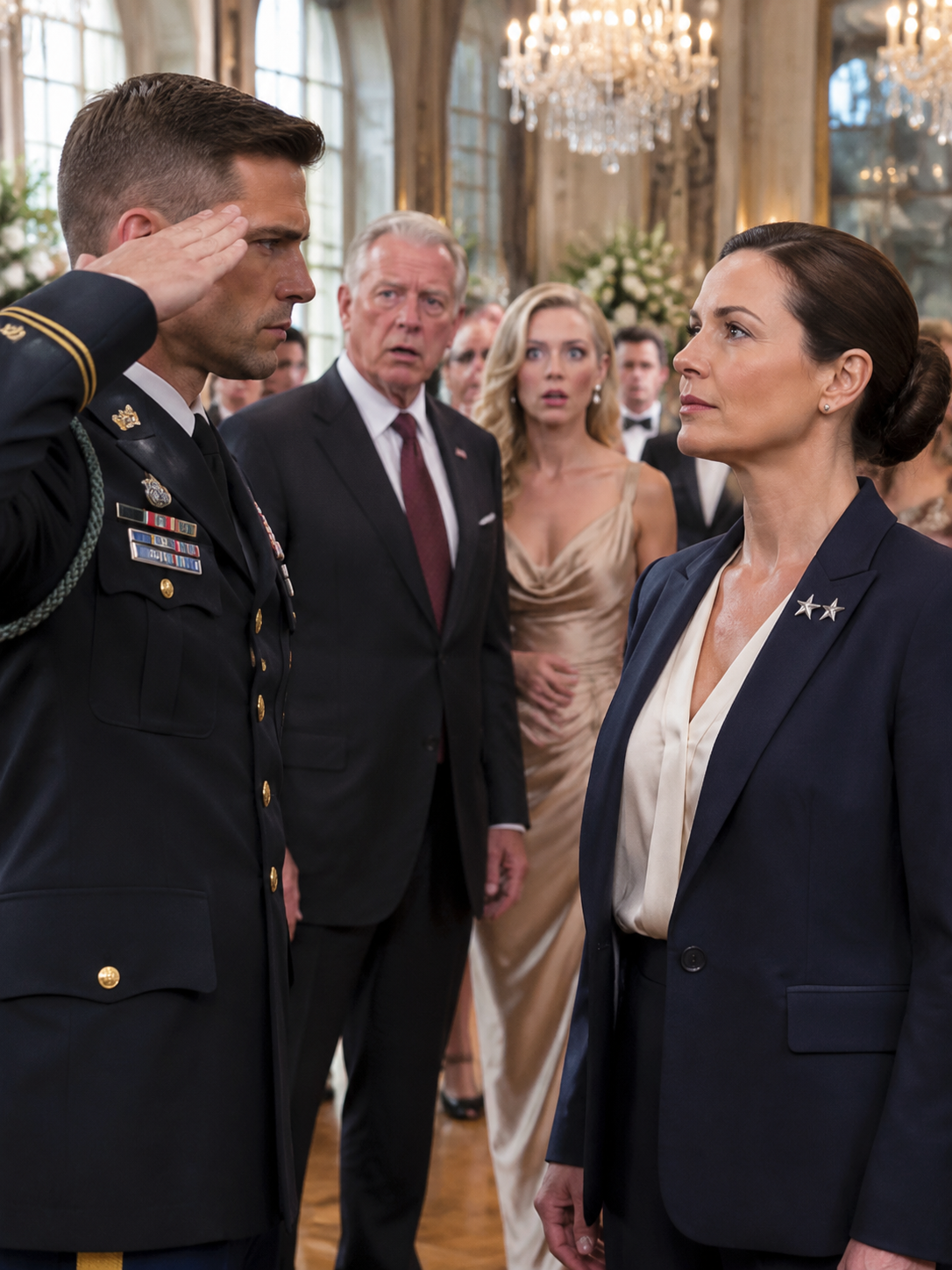
Standing beside my father was my elder sister, Genevieve, enveloped in pale champagne satin. Jenna looked immaculate, glowing with that effortless radiance our father had nurtured like a prized thoroughbred. Beside her stood the evening’s guest of honor: Captain Knox Sheridan, United States Army Special Forces.
Knox was tall, with the dense, disciplined posture of an infantryman who had spent his youth clearing compounds in the dark. His Army service greens were impeccably tailored: combat infantryman badge, airborne tab, and ribbons arranged with millimeter precision. He understood decorum, but more importantly, he understood that formality in uniform is never mere aesthetic dressing—it is an external ledger of sacrifice.
“Knox, my boy,” my father continued, his voice dripping with condescending warmth, “she’s quiet. Very private girl. Never could quite figure out what to do with herself in the private sector, but we love her anyway.”
Knox stepped forward, his right arm extending to take mine in a customary civilian greeting. His grip was firm, professional, and automatic.
Then, his eyes flickered down.