
Chapter 1
The Weight of the Acreage
Chapter 1: The Thanksgiving Ambush
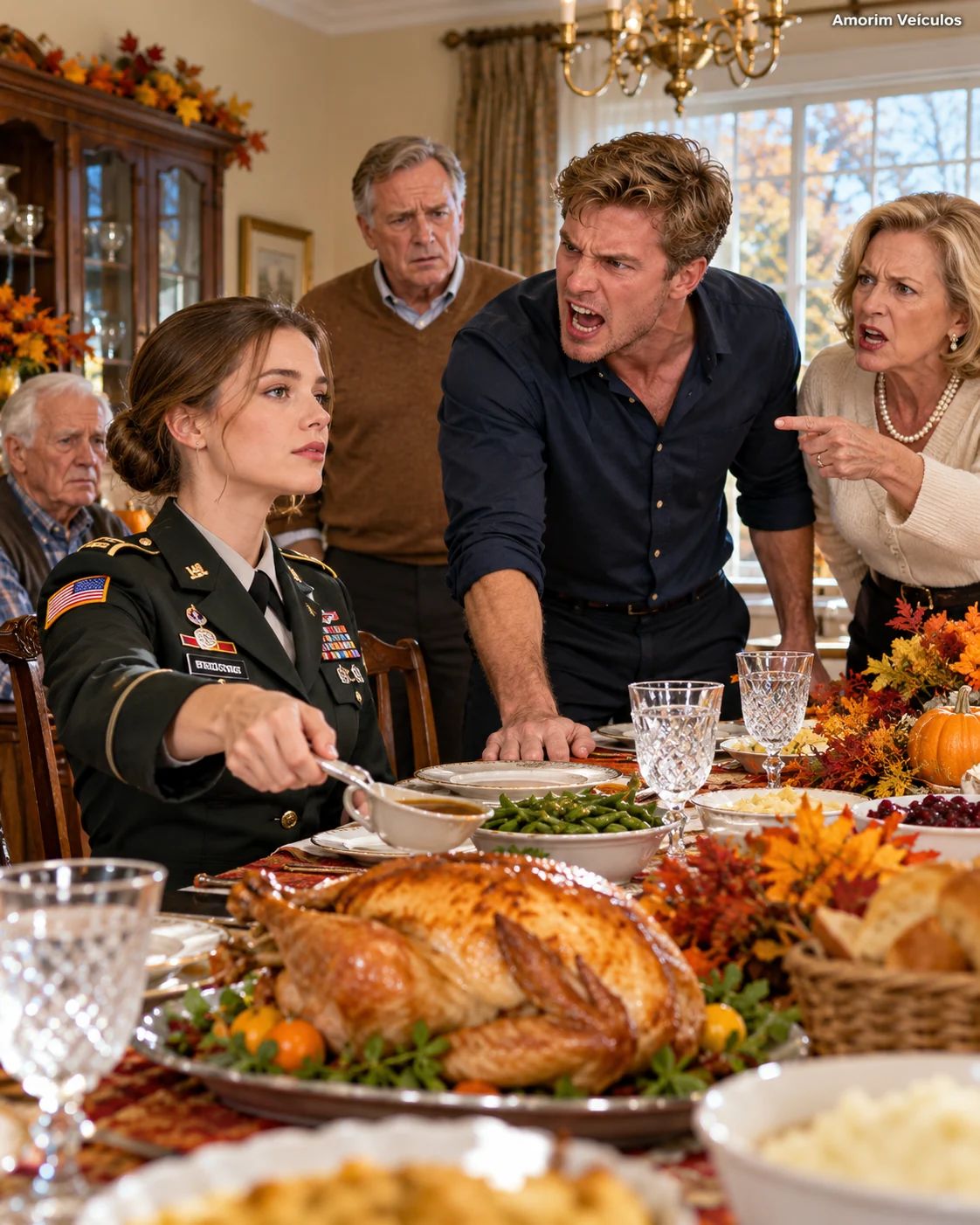
My brother’s fist collided with the Thanksgiving table, rattling the antique china and sending a rogue cranberry skittering across the pristine lace tablecloth. He demanded half of my farm. Not asked. Demanded.
My mother’s voice shattered the domestic quiet, her tone shrill and defensive, insisting that the soil rightfully belonged to him. I calmly reached for the porcelain gravy boat, sliding it across the polished mahogany. “Not one single acre,” I replied, my voice dangerously level.
The dining room crystallized into absolute stillness. My father’s hand hovered, paralyzed over the half-carved turkey. My Aunt Linda slowly lowered her silver fork, her eyes wide. Even the chaotic roar of the Detroit Lions game blaring from the living room television seemed to magically mute itself.
Derek stared at me as if I had just struck him across the jaw with a tire iron. “You think this is some kind of joke, Rebecca?”
“No,” I stated, locking eyes with him. “I think we are entirely finished discussing my property.”
That was Thanksgiving Day, November 28th, within the suffocating, cinnamon-scented walls of my parents’ home in Hopkinsville, Kentucky. I had arrived two hours prior, carrying a perfectly baked pecan pie from Kroger and a chilled bottle of sparkling cider, foolishly hoping for a peaceful holiday. I certainly hadn’t anticipated departing with half of my blood relatives harboring a venomous fury toward me.
Then again, looking back at our family history, I should have anticipated the ambush.
My name is Rebecca Whitaker. I am thirty-eight years old, carrying the rank of Staff Sergeant in the United States Army, currently stationed at Fort Campbell. Over the past sixteen years, the military has meticulously trained me to navigate high-stakes, volatile situations without surrendering to my temper. Yet, apparently, a decade and a half of tactical de-escalation training is woefully inadequate preparation for a holiday dinner with the Whitaker family.
My older brother, Derek, was forty-three. He possessed an effortlessly charming smile, drove a staggeringly expensive, lifted truck, and harbored an absolute, Olympic-level talent for making his personal catastrophes everyone else’s financial responsibility. For the better part of six years, our parents had quietly subsidized his existence. They covered his rent when he “transitioned between careers,” managed the exorbitant monthly payments on his Ford F-150, and miraculously evaporated his suffocating credit card debt on three separate occasions.
My mother affectionately termed this financial bleeding “helping him find his footing.” I, on the other hand, accurately labeled it as six consecutive years of ensuring he never had to learn how to stand upright on his own.