
Chapter 2
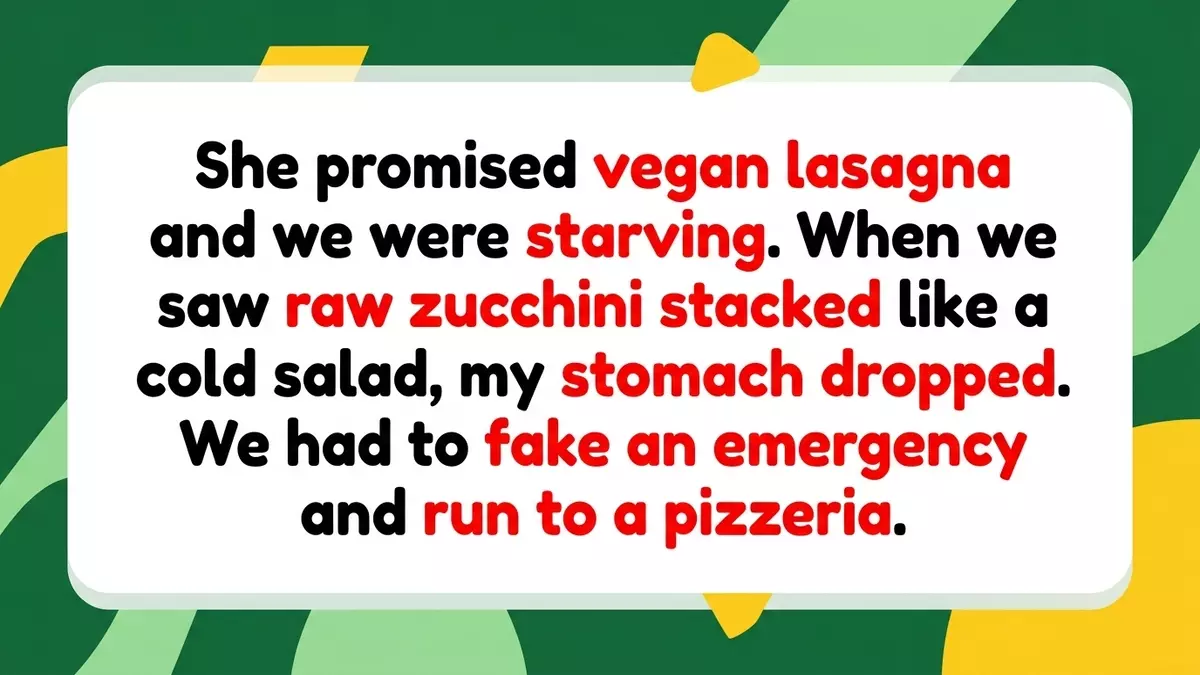
   [ Promised: Vegan Lasagna ]                 [ Served: Cold Raw Squash ]
    • Warm, bubbling, baked pasta               • Cold, unseasoned zucchini stack
    • Rich, comforting carbohydrates             • Minimal calories, high water content
                  │                                         │
                  └────────────► [ RESENTMENT ] ◄───────────┘
                       "We are starving in the name of a trend."
Claiming an urgent early morning or a sudden headache, a small group packed up and fled the house. The moment they cleared the driveway, they abandoned all pretense of diet culture and hurried straight to the nearest neighborhood pizzeria, ordering a massive, hot pie to rescue themselves from starvation.
The Psychology of Food Expectations and Hosting Etiquette
When a social gathering revolves around a meal, food is rarely just about basic nutrition; it is a reflection of hospitality, safety, and mutual care. Psychologists and relationship experts note that pulling a culinary bait-and-switch on your friends triggers an intense, negative psychological reaction known as unmet expectation fatigue.
The Problem with Menu Mislabeling
If a host invites people over for "salad night," guests adjust their biological expectations and eat a snack beforehand. However, promising a dense, carbohydrate-heavy comfort food like lasagna causes the brain to prepare the digestive system for a high-calorie meal. Serving a cold veggie stack instead creates a physical and emotional deficit, making the guests feel actively deprived.
The Trap of Lifestyle Proselytizing
In modern wellness culture, individuals who adopt a restrictive lifestyle—whether raw vegan, keto, or carnivore—frequently use dinner parties as a proxy to showcase their choices.
"Hosting is about prioritizing your guests' comfort and baseline needs over your personal desire to preach a specific lifestyle."
When a host fails to provide a proper, filling meal because it doesn't align with their current wellness trend, they cross a boundary from generous entertainer to inconsiderate ideologue.
How to Handle Sensitive Dietary Dilemmas with Friends
Navigating an awkward dinner party requires a delicate balance of maintaining personal boundaries and protecting your host's feelings. If you ever find yourself facing a bizarre culinary experiment, hospitality experts recommend a few polite strategies:
-
Communicate Food Boundaries Early: If you know a friend is experimenting with extreme lifestyles, clarify the menu beforehand. You can ask, "Should I bring a side dish or appetizer to share that fits the theme?"
-
Acknowledge the Effort, Separate the Execution: You can praise the host’s creativity while protecting your health. Use phrases like, "The presentation on this zucchini stack is absolutely stunning! I have a sensitive stomach tonight, so I can only manage a few bites, but I love the effort."