
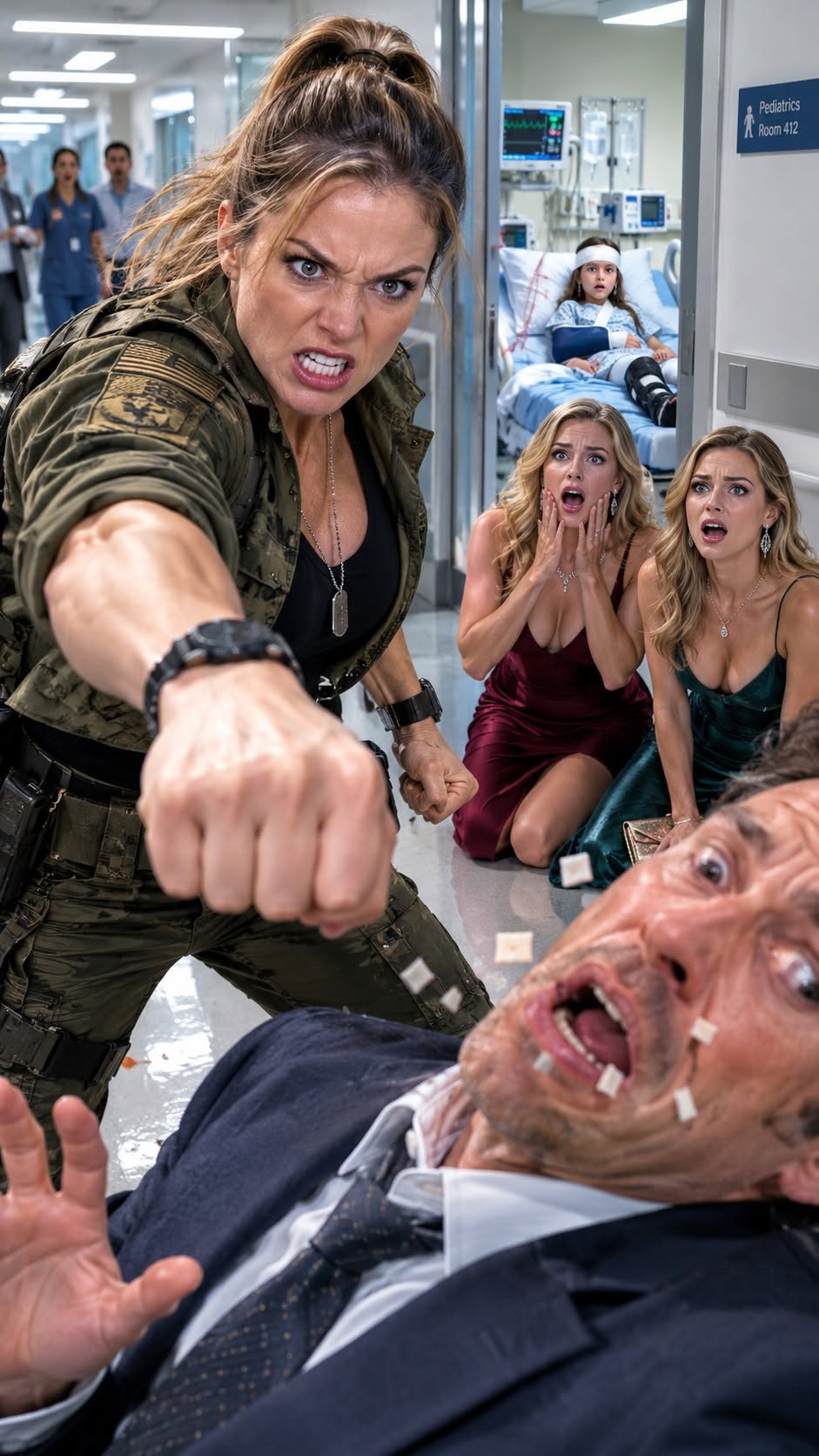
Chapter 1
The Architecture of a Lie
Chapter 1: The Silence of Six Missed Calls
I go by Nia Carter. At thirty-six years old, the fundamental reality of my universe fractured on a Tuesday afternoon, thousands of miles away from the soil of my homeland.
I was standing in a sterile operations center, the hum of high-capacity servers masking the ambient noise of a forward operating base. I had been pulled away from my personal locker for a grueling six-hour briefing. When I finally trudged back to my quarters, my muscles aching with the familiar exhaustion of a deployment nearing its end, I picked up my phone.
The illuminated glass screen was a graveyard of digital panic.
There were six missed calls from a number I knew better than my own pulse: my eight-year-old daughter, Elise. Following those were missed calls from numbers that sent a cold spike of dread through my nervous system: Ryan, my ex-husband; the administration desk at Elise’s elementary school; an unknown local hospital line. Finally, there was a single, agonizing notification for a voice memo from Elise’s device.
I stood paralyzed, staring at her name in bold pixels, while the chaotic symphony of the barracks seemed to evaporate into a vacuum. A combat medic in our unit, a kid named Miller, was saying something to me from the doorway, but his words dissolved into white noise. My thumb, usually steady enough to calibrate delicate field equipment, refused to swipe across the glass.
Then, the phone vibrated in my palm. Ryan was calling again.
I pressed the device to my ear. “Nia, answer me.” His voice was a thin, reedy frequency, vibrating with a panic I had never heard from him before.
“What happened?” I demanded, the authority of my rank bleeding into my voice.
There was a hesitation on the line—a stretch of silence long enough to carve a canyon of terror in my chest.
“Elise is in the hospital.”
I surged to my feet with such violent velocity that my heavy metal chair slammed into the drywall behind me, echoing like a gunshot. “What happened to my daughter?”
“She’s… she’s alive, Nia.”
That was a deflection, not an answer. “What. Happened.”
Ryan swallowed, the wet, nervous sound translating perfectly across oceans and satellite relays. “They found eleven fractured bones.”
For exactly one second, my brain misfired. I thought the satellite connection had garbled the audio. Eleven. Eleven was a sterile metric that belonged in after-action combat reports or casualty assessments. It was a statistical impossibility in a sentence concerning my little girl—a child who still believed in the Tooth Fairy and carefully sorted her crayons by color.