
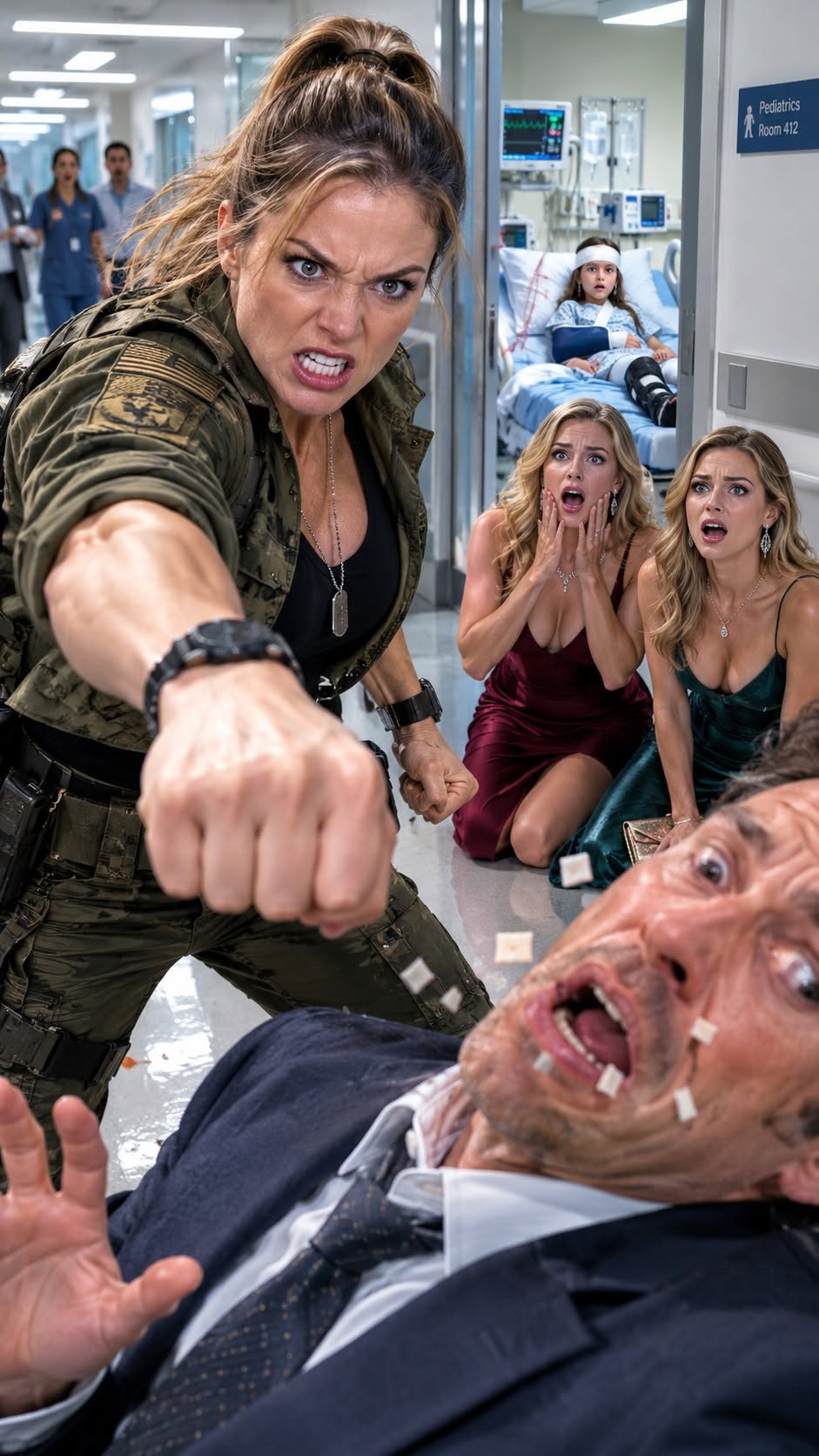
Chapter 16
“Good Lord, you are stubborn,” she sighed, the maternal mask slipping to reveal the venom underneath. “You think you can just march into my town and dismantle our lives?”
She paused, clearly expecting me to launch into a screaming, obscenity-laced tirade she could later use to paint me as unhinged.
Instead, I took a slow sip of terrible hospital coffee. “Then stop desperately calling police captains and trying to dictate what the law is allowed to call this crime.”
Her voice hardened into a brittle, icy sneer. “You think that camouflage uniform makes you powerful, Nia? You think you’re untouchable because you play soldier?”
“No,” I replied softly, my tone completely devoid of emotion. “I think my eight-year-old daughter telling the undeniable truth is going to be enough to ruin you.”
I ended the call.
It was the exact moment I finally internalized what Marcus Reed had been trying to teach me back in the desert. My lethal training, my tactical mind, and my capacity for violence mattered the most on the exact day I actively refused to use them.
Chapter 6: The Forensic Truth
Days bled into a blur of medical charts and legal briefings. Finally, Elise was discharged into my sole physical custody. The road ahead was a mountain range of orthopedic follow-ups, aggressive pain management tapers, and grueling physical therapy.
Our first night back in my quiet, suburban house, she was a bundle of raw nerves. She asked me to leave the harsh overhead hallway light burning. Ten minutes later, she asked if the deadbolts were thrown. Fifteen minutes after that, she called out to ask again.
I walked into her room every single time. I didn’t sigh. I didn’t show fatigue.
I also consciously stopped repeating the empty phrase, “You’re safe.” Repeating it over and over felt like a demand for her nervous system to calm down, an expectation she couldn’t meet.
Instead, I offered her undeniable, verifiable facts.
“The front door is locked. The back door is locked. I am sitting right here in the hallway.”
Facts. Tangible realities she could physically trust when her brain told her she was in danger.
Ryan eventually petitioned the court for an emergency visit. When my lawyer gently broached the subject with Elise, she simply shook her head and whispered, “No.”
Ryan looked at me across the mediator’s table as if I possessed a magic wand that could override her trauma. I simply stared back, stone-faced. I did not intervene.