
Chapter 21
She nodded.
“Neither do I.”
That was the right answer.
So I hugged her.
Not for long.
Not like the movies.
Her body went stiff with surprise.
Then her arms came around me.
She smelled exactly the same.
Lavender hand cream.
For one dizzying second I was seventeen.
Then I stepped back.
Mom wiped beneath one eye.
Dad looked intensely interested in the drainage assessment.
“Don’t,” I told him.
“I didn’t say anything.”
“You were about to.”
“No.”
Mom smiled.
“You absolutely were.”
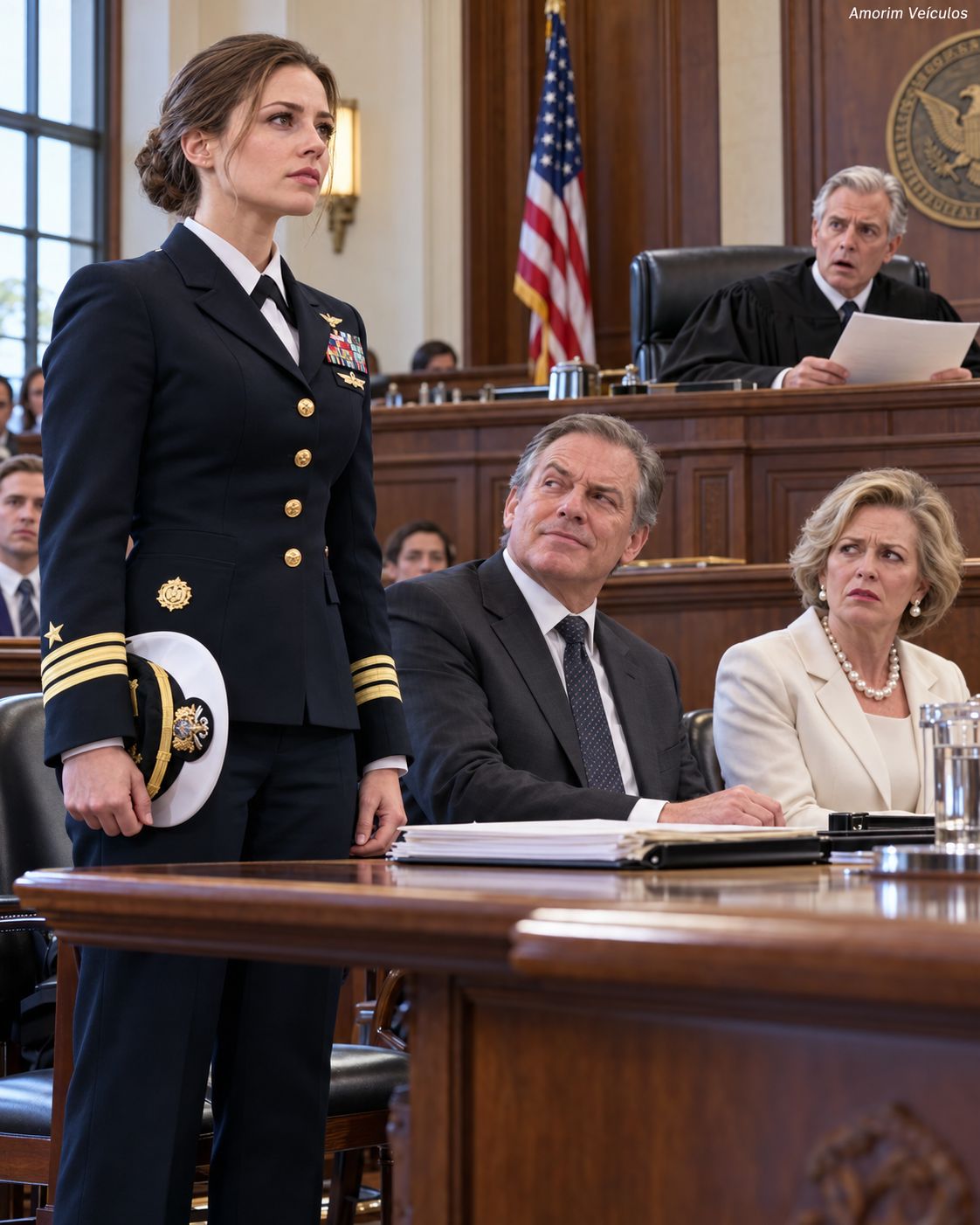
The hearing lasted twenty-two minutes.
This time I wore a navy-blue civilian suit.
Dad noticed.
“No uniform?”
I looked at him.
“You know who I am now.”
His expression softened.
“Yes.”
Judge Simmons reviewed the corrected land records.
He reviewed my tax payments.
He reviewed Dad’s maintenance and drainage expenses.
Then he looked toward my parents’ attorney.
“I understand the plaintiffs wish to dismiss the claim?”
Dad stood.
“Yes, Your Honor.”
Judge Simmons looked at him.
“With prejudice?”
“Yes.”
That meant permanently.
The judge turned toward me.
“Any objection, Commander Carter?”
“No, Your Honor.”
He signed the dismissal.
“Then Case 4238B is concluded.”
I expected relief.
Instead I felt something quieter.
Completion.
Not closure.
I had begun to distrust that word.
Some things don’t close.
They become part of the architecture.
Judge Simmons gathered his papers.
Then he looked at us.
“I take it you found the rest of the records.”
“We did,” Dad said.
“And?”
Dad looked toward me.
“We’re still figuring out what they mean.”
Judge Simmons smiled slightly.
“That’s usually the harder part.”
He stood.
We did too.
Before leaving, he said, “Take care of that house.”
I looked at Dad.
“We intend to.”
Six months later, the porch was finished.
Not restored.
Finished.
There was a difference.
We replaced what couldn’t be saved.
Kept what could.
Dad insisted on reusing several original beams.
I insisted on accessible entrances.
Mom insisted the kitchen needed more windows.
We argued about all three.
Then compromised.
The farmhouse became the Carter House.
Not the Carter Veterans Center.
Not the Samuel Carter Memorial Residence.
Grandpa would have hated anything that sounded ceremonial.
Carter House was temporary lodging for veterans and military families navigating rehabilitation, education programs, relocations, and long medical appointments.
Four bedrooms.
A shared kitchen.
A reading room.
One large porch.
No plaques explaining my medals.
No photographs of me in uniform.
Just a framed picture of Grandpa holding a hammer.