
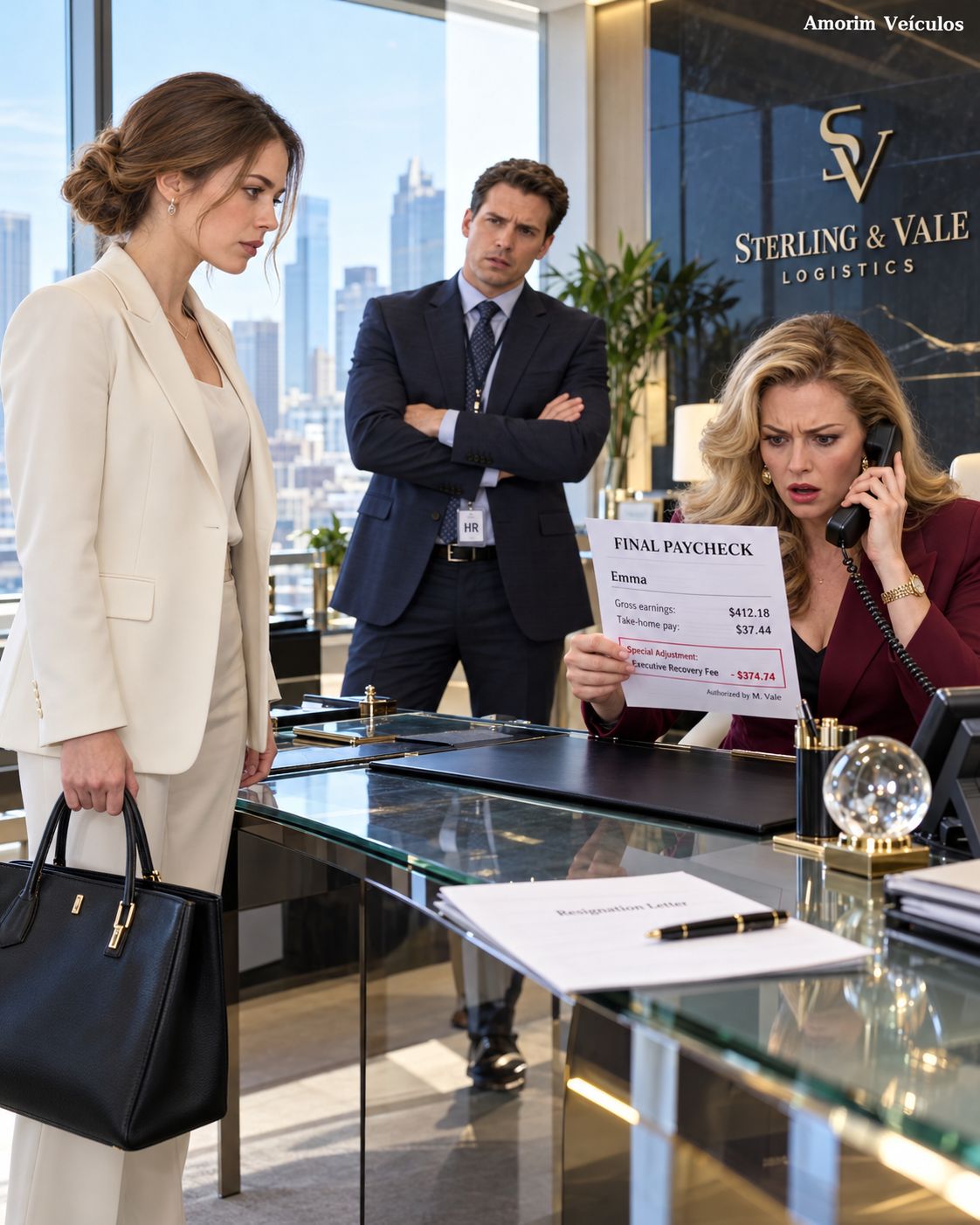
Chapter 4
Then Claudia spoke again.
“Based on the preliminary review, potential exposure involving unpaid wages, improper deductions, penalties, and retaliation could reach approximately $4.8 million.”
Miranda gripped the edge of her desk.
“That’s impossible.”
I shook my head.
“That estimate only covers payroll. The vendor transactions haven’t been fully reviewed yet.”
Those records raised even more serious concerns.
Investigators were examining inflated invoices, suspicious consulting payments, and businesses that appeared connected to executives.
Some payments were linked to expenses involving Miranda’s vacation property and Daniel’s vehicle lease.
Meanwhile, warehouse employees had been denied bonuses, even after a serious workplace accident.
Robert looked toward the investigators.
“The company will cooperate fully.”
Then he turned toward Miranda and Daniel.
“Effective immediately, both of you are suspended pending the investigation.”
Miranda stared at him.
“You can’t do that. My father founded this company!”
Robert’s expression hardened.
“And we have a responsibility to protect what remains of it.”
Miranda looked at me with disbelief.
“You planned all of this.”
I carefully folded my paycheck and slipped it back into my handbag.
“No, Miranda. I didn’t create these problems.”
I paused.
**“I simply kept the records you thought nobody would ever examine.”**
Six months later, Sterling & Vale Logistics had undergone major changes.
The company had a new name, new leadership, and a restructured board.
A public settlement resulted in employees receiving back wages and additional compensation.
Daniel pleaded guilty to falsifying payroll records.
Miranda lost her executive position, faced serious financial consequences, and was forced to give up the lifestyle she’d built while treating her employees as disposable.
I didn’t return to my old office.
I had no desire to sit behind the same desk where I’d spent three years being underestimated.
But I did return to the warehouse once.
The employees had invited me to lunch after their back-pay checks finally arrived.
Rosa, a forklift operator who’d worked there for years, pulled me into a tight hug.
“You helped us get our money back,” she whispered.
I felt tears filling my eyes.
I looked around the warehouse.
People were laughing.
Supervisors were speaking openly with workers.
For once, employees weren’t afraid that asking a question might cost them their shifts.
I hugged Rosa back.
“All I did was refuse to let them keep calling unfair deductions company policy.”
That afternoon, I took my final paycheck home and placed it in a simple frame.
Not because the $37.44 meant anything financially.