
Chapter 6
There was Beatrice Sterling, dressed in mourning black, sitting across from a prime-time anchor. She was weeping delicately.
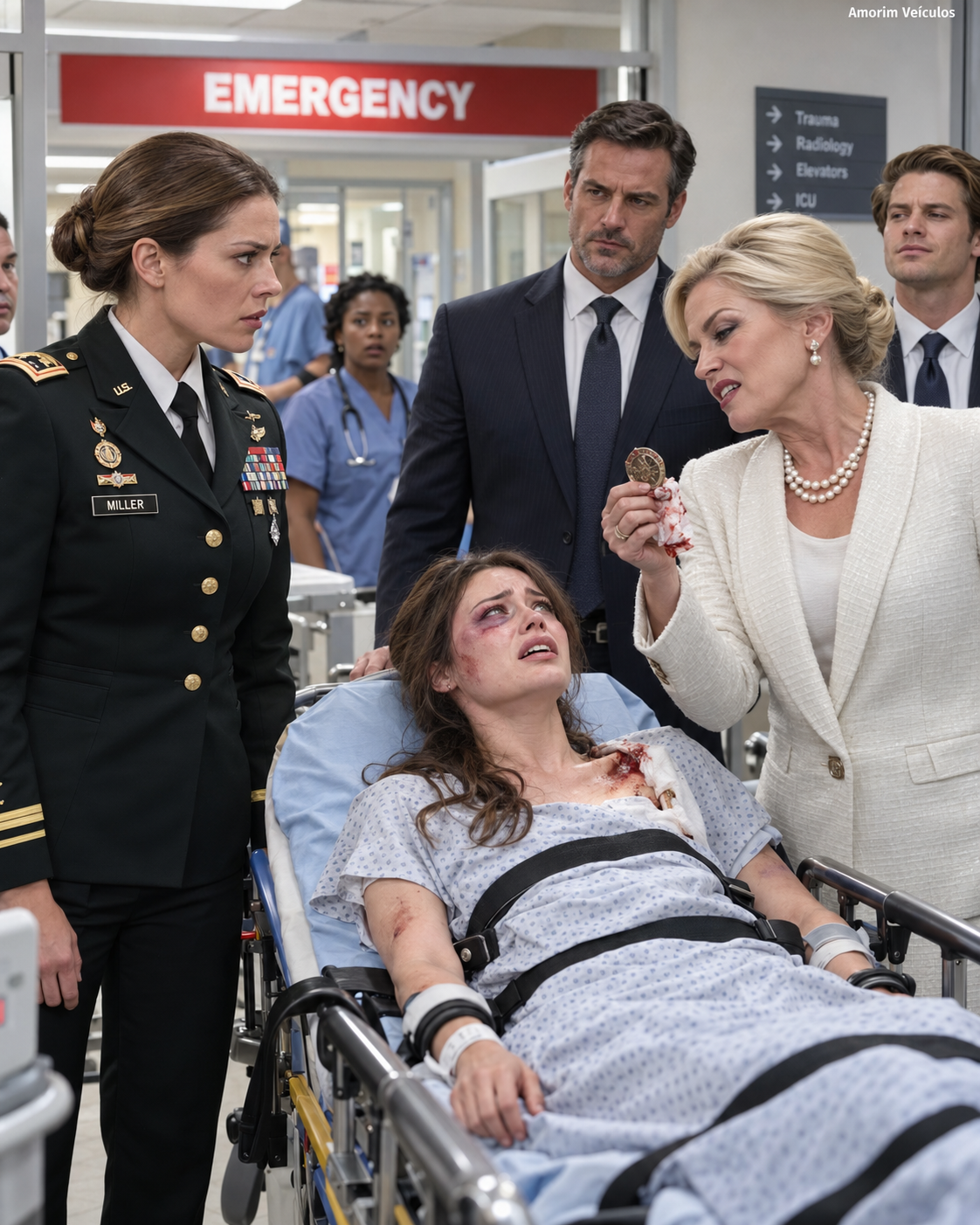
“My daughter-in-law is deeply unwell,” Beatrice lied beautifully to millions of viewers. “She suffers from severe paranoid delusions. And her mother, a disgraced military officer, kidnapped her from a hospital against medical advice. We just want our Chloe back.”
“They’re burying you in the press, Sarah,” Calloway said. “They’re trying to destroy your credibility before the grand jury convenes.”
Suddenly, the red emergency klaxons outside the building began to wail, cutting through the thick concrete walls. The heavy blast doors of the headquarters building automatically slammed shut with a hydraulic hiss.
Calloway pressed her earpiece, her eyes widening. She drew her sidearm.
“Calloway, what is it?” I demanded, standing up and instinctively pushing Chloe behind me.
“Perimeter breach at Gate Four,” Calloway said, racking the slide of her weapon. “Two heavily armored SUVs just rammed the barricades. They’re heading straight for this building.”
Chapter 3: Siege on Fort Liberty
For six months, the war was not fought in a courtroom. It was a brutal, grinding war of attrition.
The breach at Gate Four wasn’t a full assault—it was a message. The SUVs had been driven by hired contractors who bailed out and vanished into the Carolina pine woods before the MPs could box them in. In the trunk of the abandoned lead vehicle, they found a single item: a photograph of Chloe and me, taken through a high-powered sniper scope while we were walking across the supposedly secure base quad.
Beatrice was letting us know that there was no wall high enough, no military base secure enough, to keep her out.
The financial strangulation came next. With my pension frozen and my bank accounts tied up in a maze of malicious civil litigation filed by the Sterling lawyers, we were living on military rations and the charity of my old unit. Beatrice deployed her army of lobbyists in Washington. Senators I had briefed during the Afghan war suddenly wouldn’t take my calls.
We were being starved out.
We moved to an undisclosed, reinforced bunker-style apartment on the far edge of the artillery ranges. For six months, Chloe and I didn’t sleep at the same time.
I took the night watch. I would sit by the reinforced window, my customized M1911 pistol stripped, cleaned, and reassembled on the table every single night. I watched the treeline. Sometimes, I saw shadows moving in the pines—drones flying just out of radar range, men with thermal optics probing our security.