
Chapter 2
A murmur of laughter moved through the ballroom, gentle and affectionate.
Grandpa lifted one hand as if to say he had no intention of apologizing.
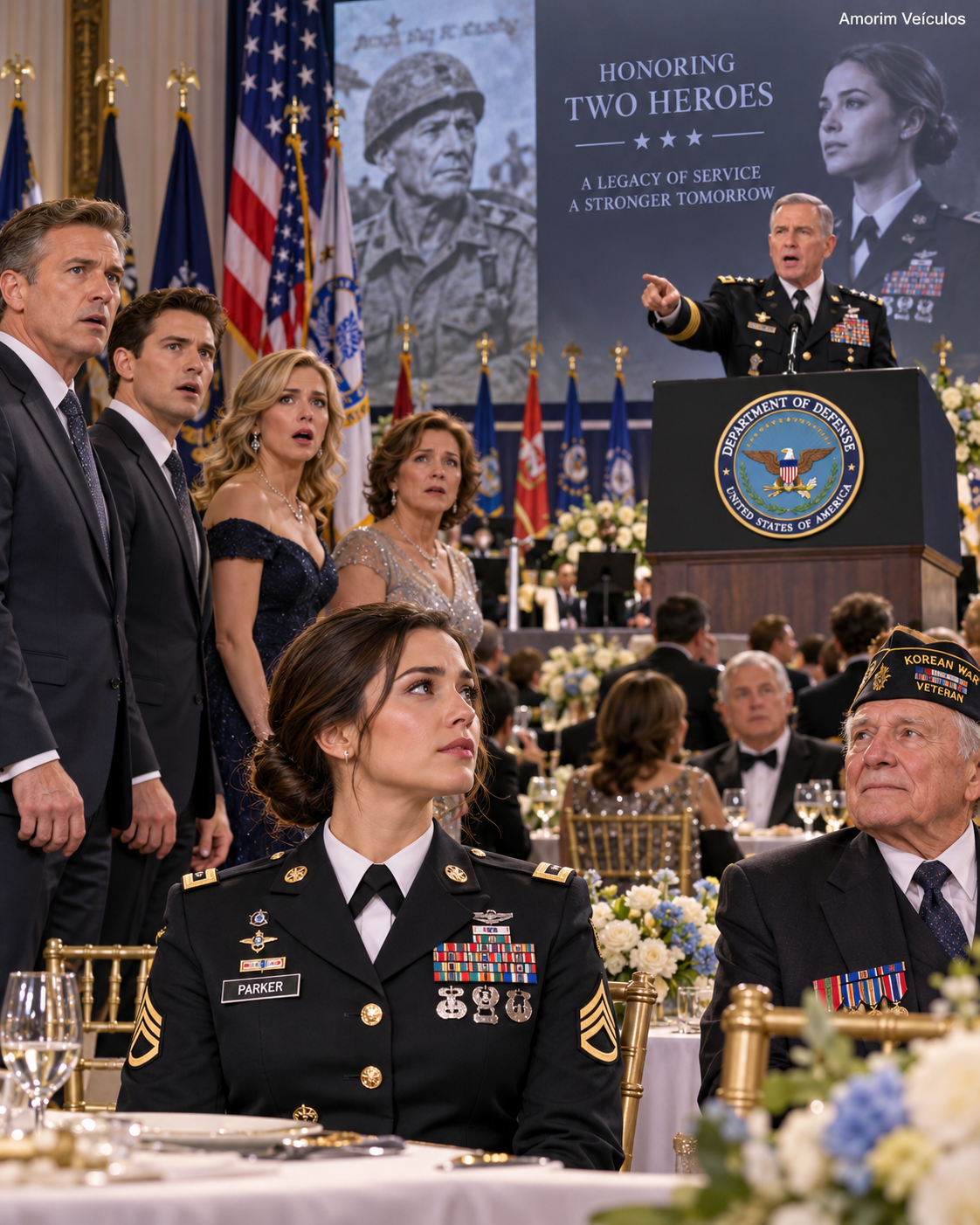
The general returned to the microphone.
“Earlier today, we recognized the service of Mr. Thomas Parker, whose courage and commitment during the Korean War helped shape the life of this family and contributed to the long tradition of service we honor here.”
Grandpa lowered his head slightly.
The applause this time was softer than before, less formal.
The general waited.
“However, service is not preserved only by memory. It continues through the choices made by later generations.”
I had heard pieces of the citation before.
But not this.
“The Department of the Army has authorized a commendation recognizing Staff Sergeant Parker for exceptional leadership during an overseas humanitarian evacuation and rescue operation last year.”
I kept my eyes forward.
The phrase humanitarian evacuation sounded neat and contained.
It did not describe the rain.
It did not describe roads turning into rivers.
It did not describe generators failing and communication systems dropping in and out.
It did not describe the local families crowded into a partially damaged regional clinic while an approaching storm cut off the primary route to the evacuation point.
It did not describe the young lieutenant beside me staring at a map and whispering, “We’re losing the road.”
It did not describe choosing another route through higher ground because years of training, local information, and plain instinct told me we had minutes rather than hours.
And it did not describe how terrified I had been of making the wrong call.
The general continued.
“Staff Sergeant Parker coordinated personnel from multiple units, maintained communication with civilian authorities, reorganized the convoy route when established plans became unusable, and remained on location until all designated civilians and military personnel had been accounted for.”
All designated civilians and military personnel.
That was the language of official records.
I remembered names.
Mrs. Rahman, who had refused to leave without the metal box containing her husband’s photographs.
Specialist Cole, who had spent six hours helping move patients and later insisted he hadn’t done anything special.
Captain Alvarez, who had trusted my recommendation when changing the convoy route meant departing from the original plan.
An exhausted local doctor who had pressed both of my hands between hers before boarding a transport vehicle.
It had never felt like heroism.
It had felt like work that had to be done well because people were counting on us.