
Chapter 1
The Weight of Latent Defects
Chapter One: The Ballroom Execution
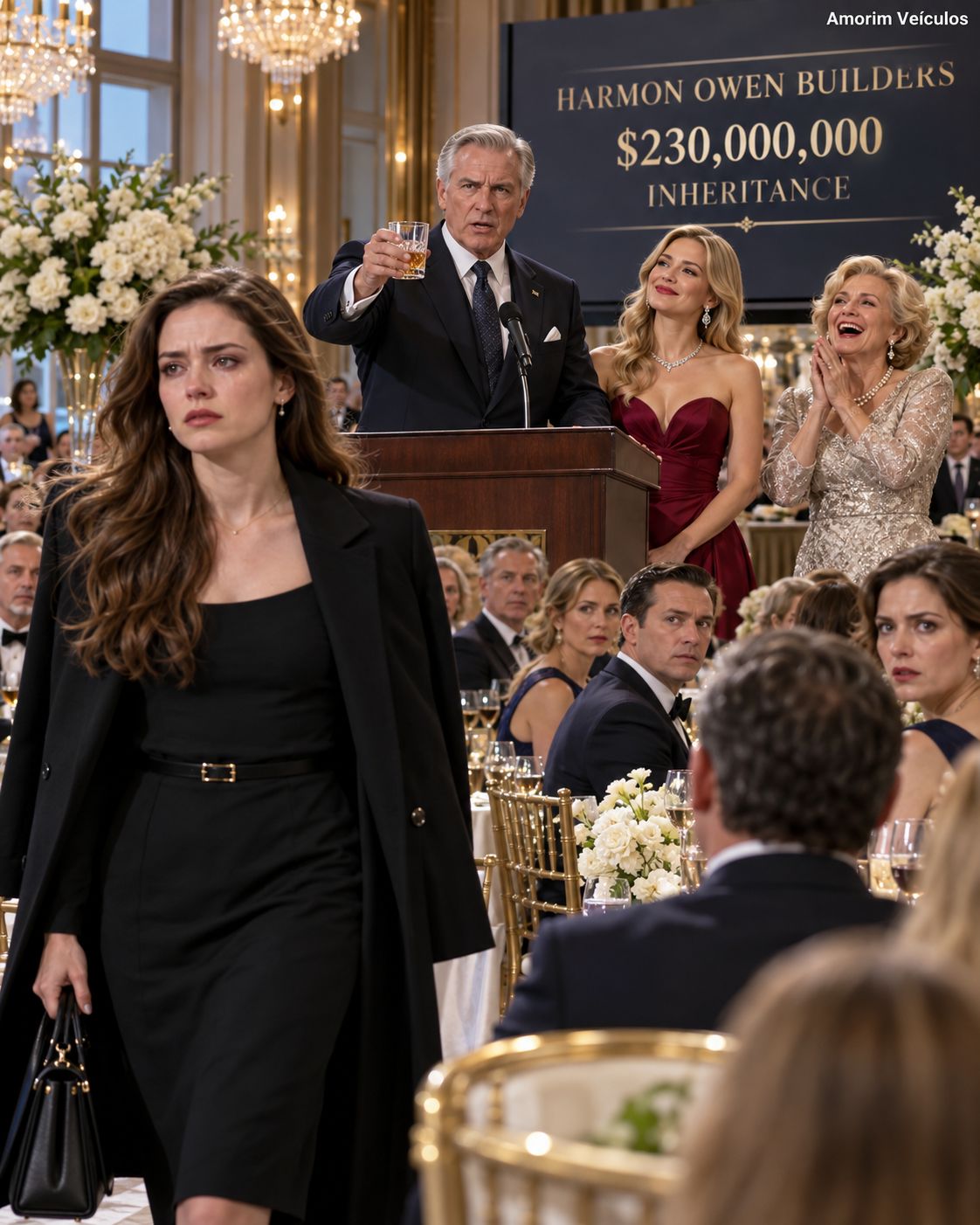
My father lifted his crystal tumbler beneath the amber chandeliers of the Foxbrook Country Club, cleared his throat into the brass neck of the microphone, and systematically executed me in front of eighty silent guests.
“My daughter Briana inherits Harmon Owen Builders,” Raymond said, his baritone booming through the ballroom with the self-satisfied resonance of an auctioneer hammering down a record sale. “Two hundred and thirty million dollars in total enterprise valuation. Land, contracts, equipment, and future pipeline.”
A ripple of practiced applause surged through the room—bankers from downtown Columbus, drywall contractors dressed in stiff Sunday collars, city councilmen nursing neat bourbons. Then Raymond’s heavy, weathered jaw shifted. He turned his eyes deliberately toward Table Eleven, back by the swing doors of the banquet kitchen, where I sat pinned between a cement supplier’s nervous spouse and an empty seat.
“Chloe,” he said, speaking directly into the amplifier so the static hissed across the polished walnut walls. “You should consider yourself profoundly fortunate I still permit you to carry my surname. Most men of my stature would have severed that privilege decades ago.”
In the dead hush that followed, my mother, Janet Owen, laughed.
It was not a muffled nervous titter. It was a bright, bell-like, crystalline sound—a theater laugh, cultivated across thirty-five years of country club luncheons and charity galas. She laughed half a beat ahead of the room, exactly like a soloist who rushes her cue because she has rehearsed the measure so many times in isolation that she no longer requires the conductor.
The room hesitated, suspended between confusion and obedience. At Table Four, two wives from the church altar guild turned rigid, their manicured fingers tightening around their linen napkins. Near the wet bar, Gus Weaver—Raymond’s head job-site superintendent for twenty-two years—froze with his beer halfway to his mouth, the color draining from his leathery neck. And at Table Three, an elderly, silver-haired man in a charcoal suit gripped the edge of his table so hard his knuckles resembled bleached bone, half-rising from his chair before the invisible weight of the world forced him back down into his seat.
I did not flinch. I did not shed a single tear. I did not offer the room the entertainment of my humiliation.
For thirteen years, I have worked as a senior large-loss claims adjuster for Hartwell Mutual. When a four-story commercial property collapses into rubble or an underground main bursts and rots the subflooring of a suburban development, I am the person who walks through the damp ruins carrying an aluminum clipboard and an LED floodlight. People assume my occupation is governed by numbers, policies, and monetary settlements. It is not. My profession is the excavation of structural narratives. Everyone who submits a seven-figure claim presents an immaculate story of unforeseen catastrophe; my responsibility is to find the precise fracture point where their fabricated story violently diverges from the physical evidence.