
Chapter 1
Part 1
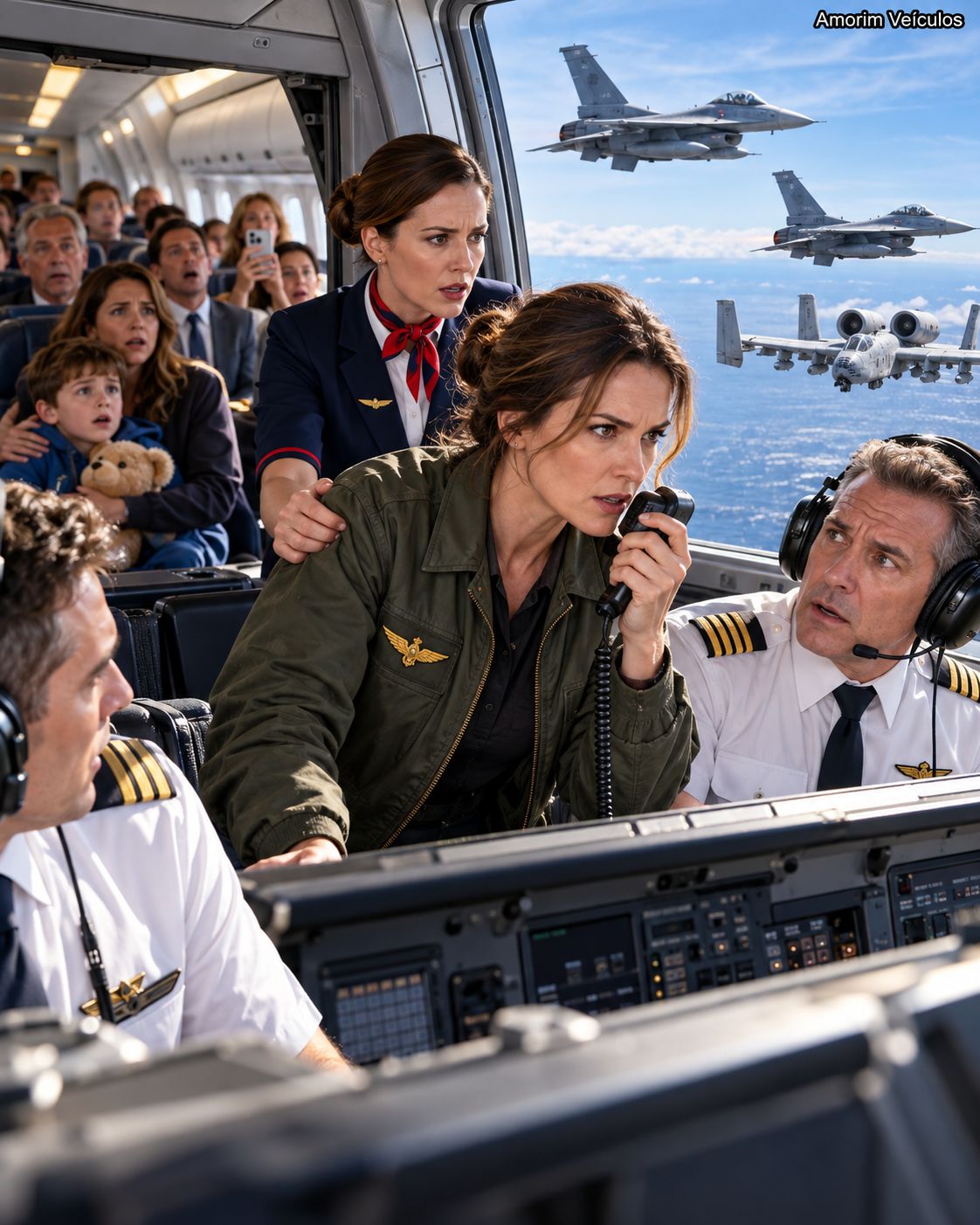
Air Command issued one final warning.
“Civilian aircraft, break contact with the fighter immediately, or you will be ordered to land under military escort.”
The words remained suspended in the cockpit, colder than the thin air rushing past the windows.
I kept the headset pressed to my ear.
Beyond the glass, Viper’s F-16 shuddered through the dawn light, one wing dipping and recovering with the uneven rhythm of a bird trying to fly with an injured feather.
“Viper,” I said, keeping my voice level, “look at your attitude indicator.”
“It’s flickering.”
“Then stop trusting the flicker.”
“I’ve lost primary control.”
“You haven’t lost control.”
“I can barely feel the aircraft.”
“You can still feel the pressure in the stick, can’t you?”
There was a pause.
“Yes.”
“Good.”
The captain stood beside me, one hand braced against the console and the other gripping the back of the co-pilot’s seat.
He had the composed face of someone trained to make fear invisible, but his eyes kept moving between me, the instruments, and the fighter outside.
“Viper, the aircraft is trying to convince you that every correction is late,” I continued.
“That’s because every correction is late.”
“No.”
I watched the fighter’s nose rise a fraction, then fall.
“It is giving you false information.”
“Who is this?”
The voice came from Air Command again.
“Identify yourself immediately.”
I ignored it.
“Viper, relax your right hand.”
“My right hand is the only thing keeping us level.”
“Your right hand is chasing the aircraft.”
“And what do you think I should do?”
“Let the aircraft settle.”
For three seconds, there was only static.
Then his breathing changed.
I remembered that breathing.
Daniel Reyes had been twenty-three when I first met him, with restless eyes, a crooked grin, and an absolute certainty that skill could compensate for impatience.
He had been brilliant from the beginning.
He could read weather patterns faster than most instructors, calculate fuel margins in his head, and recognize a mechanical imbalance from the smallest change in vibration.
But he had hated waiting.
He believed hesitation was weakness, and he treated caution as an insult to his ability.
During his first advanced recovery exercise, he had overcorrected three times in less than ten seconds.
I had reached across the simulator console and covered his hand with mine.
“Stop fighting the aircraft,” I had told him.
He had looked at me with an expression halfway between irritation and embarrassment.