
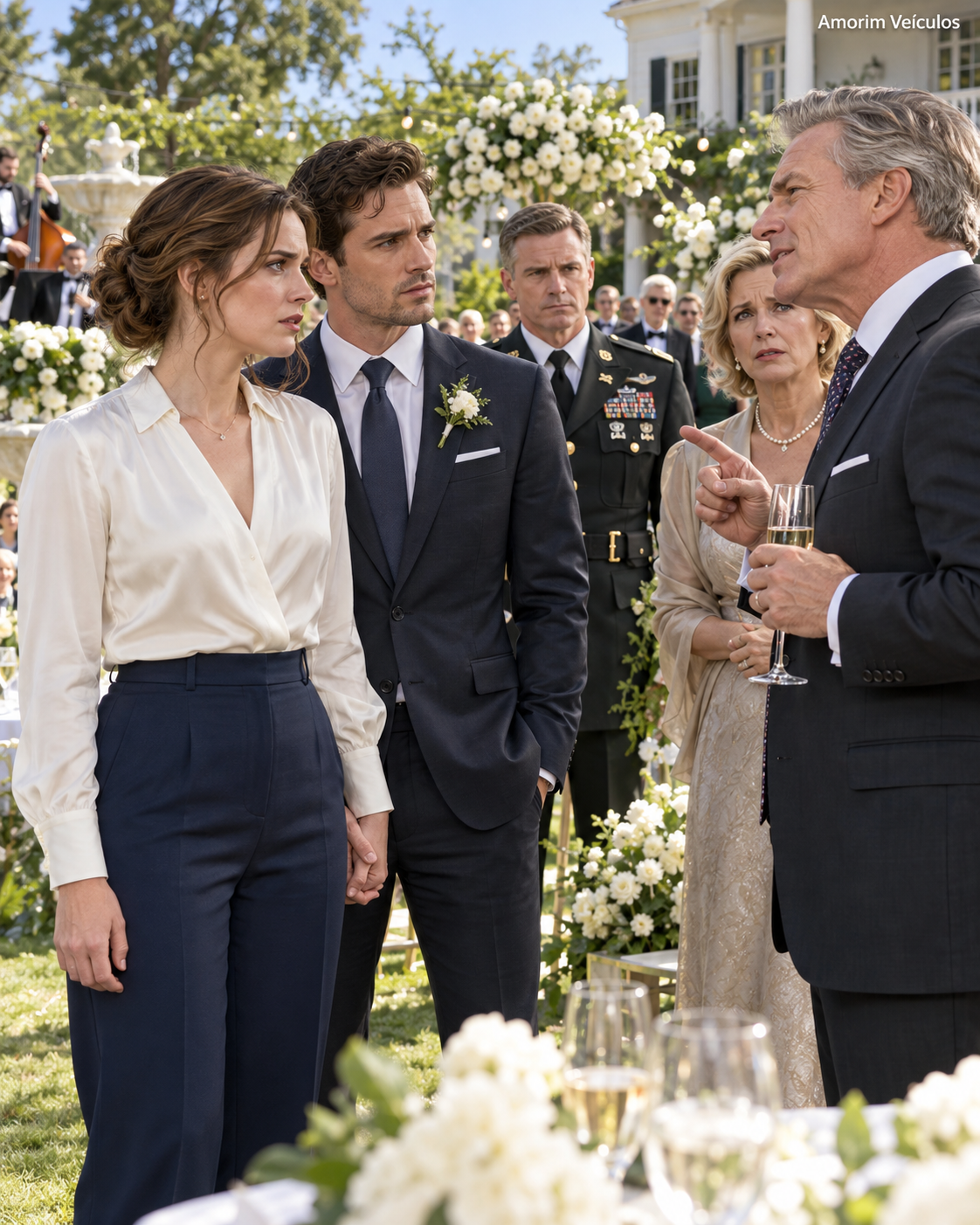
Chapter 4
He died before I received my commission.
His grave was twenty minutes away.
I drove there before sunrise and stood beneath the oak trees with my coat pulled tight around me. The cemetery was empty except for birds waking in the branches and distant tires on wet pavement. I looked at his name carved into stone and finally said aloud what I had refused to admit for years.
“Dad is using you as an excuse for everything you would have hated.”
The wind moved through the grass.
I remembered something Grandpa told me when I was fifteen after Dad humiliated me at a family dinner.
“Honor isn’t what people call you, Ally. It’s what you do when nobody gets to applaud.”
Standing there, I stopped asking what kind of daughter my father wanted.
I started asking what kind of woman I intended to be.
By sunrise, I had my answer.
And for the first time in my life, my father’s approval was no longer part of it.
### Part 2
At 3:17 the following morning, three days after the engagement party, my secure phone vibrated against the nightstand. The sound was intentionally unpleasant, a short mechanical pulse that could drag me from the deepest sleep without waking half the neighborhood. Daniel shifted beside me but didn’t open his eyes, and within seconds I was in the hallway answering the call. Whatever pain my father had caused disappeared behind a door in my mind because the voice on the other end belonged to Colonel Hayes.
“We need you at command,” he said.
That was enough.
Daniel knew my work involved irregular hours, but he didn’t know the full scope of my responsibilities. I had never enjoyed withholding pieces of my life from him, yet some information was not mine to share, even with the man I intended to marry. I left him a short note, drove through nearly empty streets, and reached the operations center while darkness still covered North Carolina. Inside, the woman my father described as a glorified clerk ceased to exist.
People looked to me for decisions.
A team operating overseas had encountered a sudden complication during an evacuation involving American civilians and local medical personnel. The original route was no longer usable, communications were inconsistent, and everyone in the room understood that hesitation could make an already unstable situation worse. For several hours I studied updates, listened to people who knew their specialties better than I did, rejected two options, approved a third, and stayed in my chair until confirmation finally arrived that the civilians and our personnel were safe.