
Chapter 12
I looked at my half-brother. For the first time in his life, he wasn’t performing. The spoiled boy had been broken, but in the fracture, something resembling a man was beginning to form.
“Go out through the side entrance, Julian,” I told him softly. “Martin’s associate is waiting by the gate. Give them your full statement.”
He nodded once, wiped his face, and walked out into the dark.
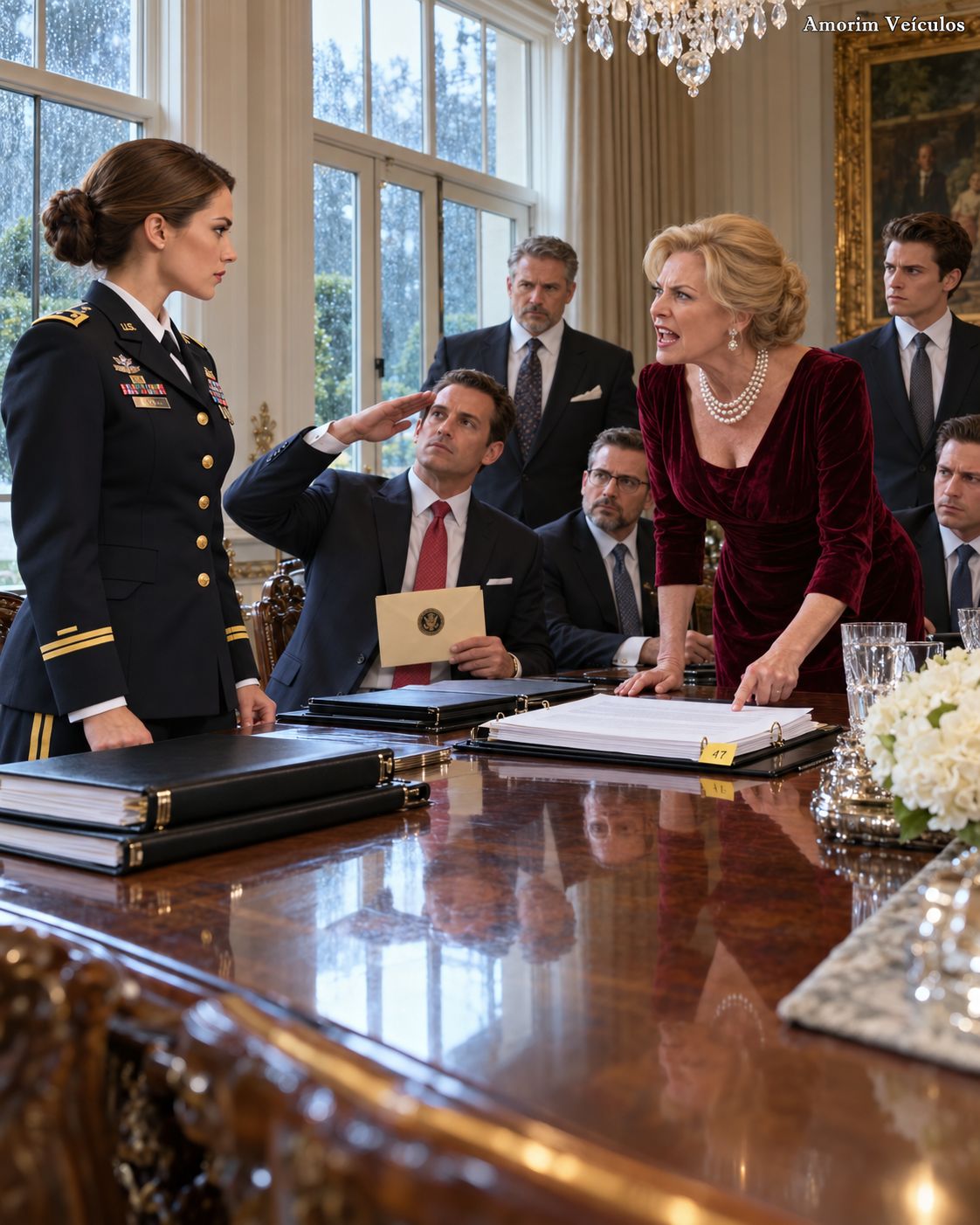
Then there were only three of us left in the dining room: Victoria, Martin Hale, and myself.
My mother stood at the head of the long table, staring down at the unsigned Waiver of Inheritance. The gold lettering caught the light of the chandelier, mocking her.
“You think you’ve won,” she whispered, her voice venomous, though her hands shook uncontrollably. “You think you’re so righteous with your uniform and your documents. You took everything Arthur had, and now you’ve destroyed this house.”
I picked up the third page of my father’s handwritten letter.
“Dad didn’t leave me his legacy because I was his favorite, Mother,” I said, looking her dead in the eye. “He left it to me because he knew I was the only person in this family who would never compromise the truth for the sake of comfort.”
I turned the page over. In the bottom margin, written in faint, pencil script, were three final lines Arthur Sterling had left for his daughter:
Do not keep the Boston brownstone out of obligation, Sienna. Keep it only if it brings you peace. And remember: the loose floorboard in the second-floor library still squeaks. I never repaired it because when you were nine, you hid your failed math tests beneath it, and I loved knowing where to find your secrets.
A soft, sharp laugh escaped my throat—a clean, genuine sound that cut through the toxic air of the room.
“What is funny?” Victoria demanded, her voice cracking. “What could possibly be funny to you right now?”
I folded the letter carefully, sliding it into my interior coat pocket directly against my heart.
“Nothing you could ever understand, Mother,” I said.
I turned on my heel and walked down the grand corridor. The front doors stood wide open to the night air. Outside, two federal investigators in dark raincoats were ascending the stone steps, badges displayed in their leather wallets.
I nodded to them as I passed. They stepped aside with professional deference, crossing the threshold into the house to complete what Arthur Sterling’s ledgers had begun.