
Chapter 13
It was Carol Jennings, Neil’s executive assistant at Harmon Owen Builders for three decades.
She didn’t need to speak a complete sentence. The ragged, hollow intake of breath on the other end of the line told the entire story.
“He went peacefully, Chloe,” Carol sobbed, abandoning any pretense of corporate distance. “The neighbor found him on the back deck. In the gray chair. Facing the water. He was holding that wooden box on his lap.”
The world shrank to a pinpoint of white noise. I stood in the grocery aisle, clutching a cardboard box of pastries, my chest caving inward as if a load-bearing column had fractured beneath an immense ceiling.
I had possessed a father for precisely forty-eight hours.
The funeral took place the following Thursday at a grand, stone Presbyterian church in Upper Arlington—a sanctuary Neil had never attended, situated in the affluent neighborhood where Raymond Owen lived.
The hypocrisy of the service was staggering.
Raymond occupied the first pew, playing the role of the devastated surviving partner to absolute perfection. He wept openly, dabbing his eyes with an embroidered handkerchief, while city leaders and banking executives patted his heavy shoulders. Briana sat beside him in designer mourning silk, whispering condolences to every passing dignitary.
I sat in the very last row, beneath the shadow of the balcony, beside the heavy oak exit doors—the exact position Neil had occupied during my high school and college graduations.
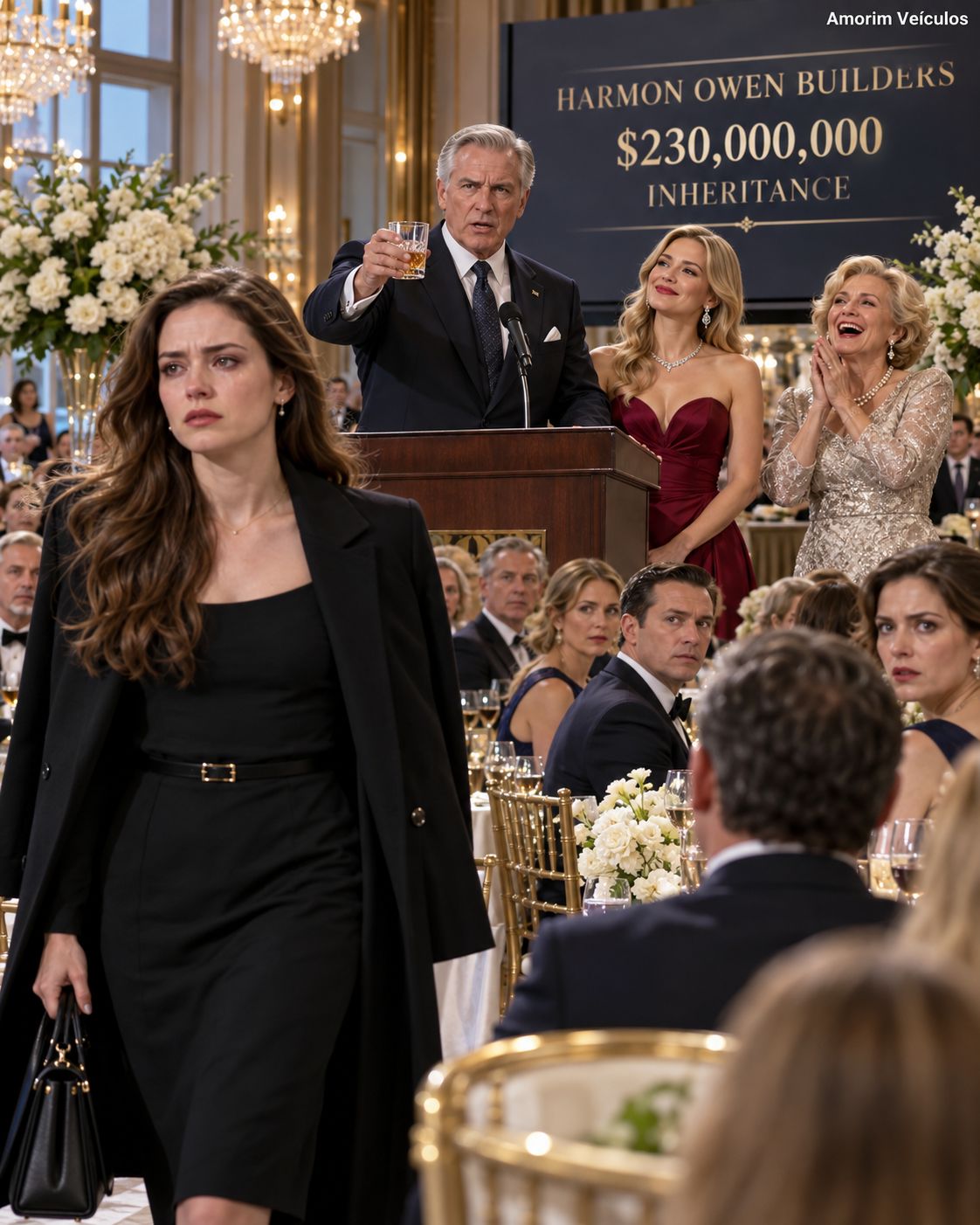
When Raymond stepped up to the pulpit to deliver the eulogy, the brass chandeliers gleamed above his silver hair.
“Neil Harmon was more than an associate,” Raymond boomed, his voice catching with masterfully executed theatrical grief. “He was my brother. My balance wheel. The quiet conscience behind every brick Harmon Owen ever laid. We built an empire together from the bed of a rusted pickup truck. And as I prepare to pass this great legacy to my daughter Briana, I carry Neil’s spirit with me.”
Halfway through the speech, Raymond’s gaze swept across the sanctuary, acknowledging the bowed heads of the subcontractors. His eyes drifted toward the shadows beneath the rear balcony.
And there, across forty pews of weeping mourners, his eyes locked onto mine.
A hitch occurred in his voice—a micro-fracture in his cadence, half a second of dead air that nobody in the church noticed except the large-loss adjuster sitting in the dark. His jaw tightened. A flash of pure, primordial rage flickered across his pupils, quickly smoothed over by forty years of public relations mastery.