
Chapter 22
“I believe you.”
“Then why isn’t that enough?”
“Because forgiveness and access are different things.”
She began crying again.
I continued gently. “You finally taking responsibility matters. I hope it changes how you treat people. But I spent most of my life being asked to absorb damage so everyone else could remain comfortable. I’m not doing that anymore.”
“Do you hate me?”
“No.”
That was true.
Hating her would have required carrying her everywhere with me.
“I don’t hate you,” I said. “I just don’t organize my life around you anymore.”
We ended the call without shouting.
I never told her I forgave her because I did not.
Maybe some people need that word to move forward. I discovered I didn’t.
I could accept that she regretted what she had done without pretending regret restored what she destroyed.
Two weeks later, I stood in front of my closet preparing for a formal briefing.
My replacement dress uniform hung inside, perfect and untouched. The ribbons had been restored, the jacket tailored properly, every piece where it belonged.
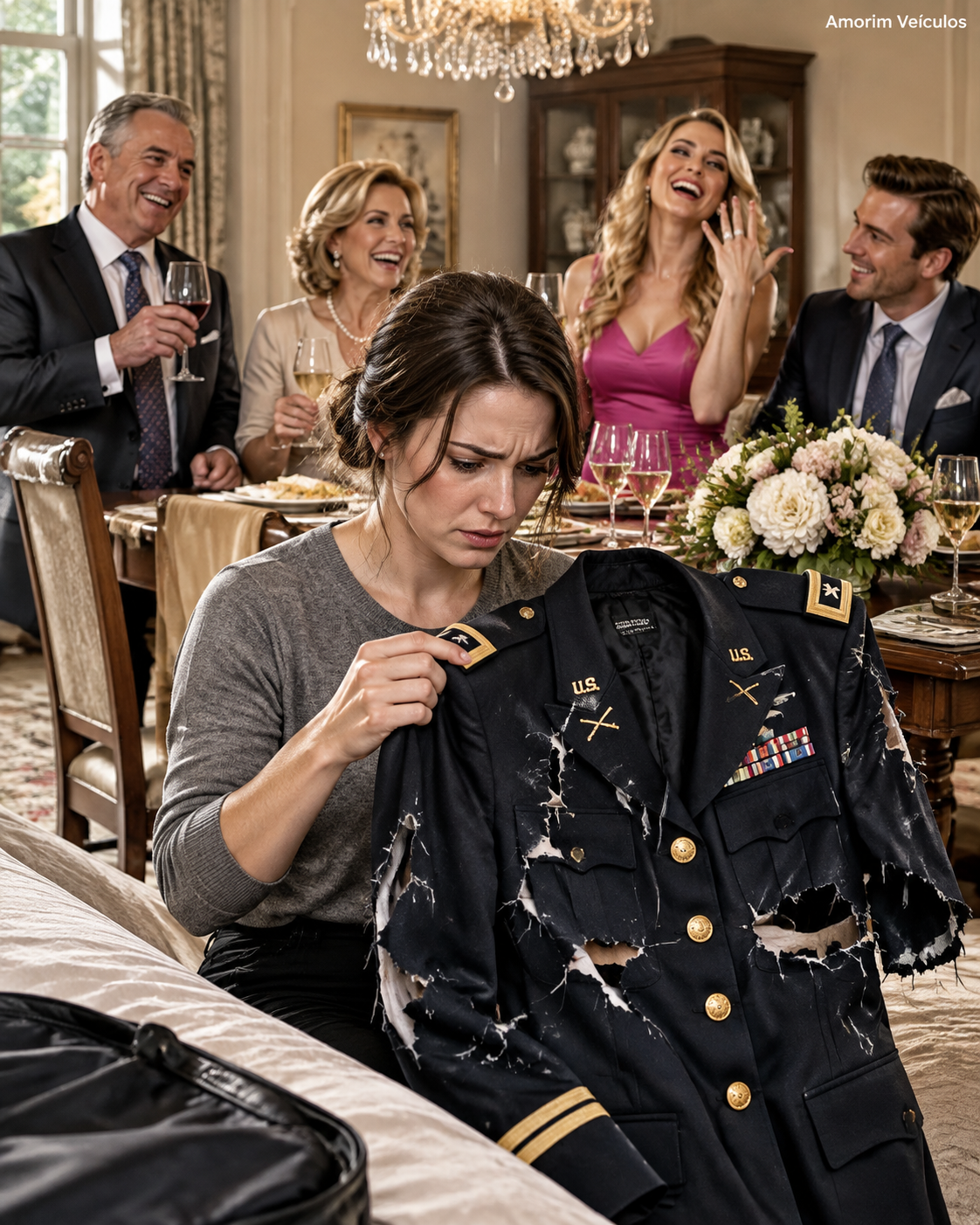
For a moment I thought about the old jacket.
I had kept it.
Not hanging beside the new one, but folded inside a storage box along with the damaged ribbon bar and the safety pins I had used that morning.
People sometimes assume I kept it as a reminder of what my sister did.
That is not why.
I kept it because of what I did afterward.
I showed up.
That became the part of the story that mattered most.
My sister had believed the uniform created the officer. My mother had believed damaging the uniform reduced my work to something small enough to dismiss. My father had believed silence could protect the family from consequences.
They were all wrong in different ways.
The fabric had never been the source of my value.
Neither were the rank, the assignment, the Pentagon office, or the approval of a general.
Those things mattered, and I had worked hard for them, but somewhere along the way I finally learned the lesson Grandpa had been trying to teach me since childhood.
A mountain does not become a mountain when somebody important points at it.
It was there before they noticed.
Today, my parents still describe my career vaguely when relatives ask.
They say I “work in Washington.”
I no longer correct them.
Brianna and I exchange brief messages on birthdays, nothing more. Mom periodically attempts to create a family reunion, and Dad occasionally acts confused about why things never returned to normal.