
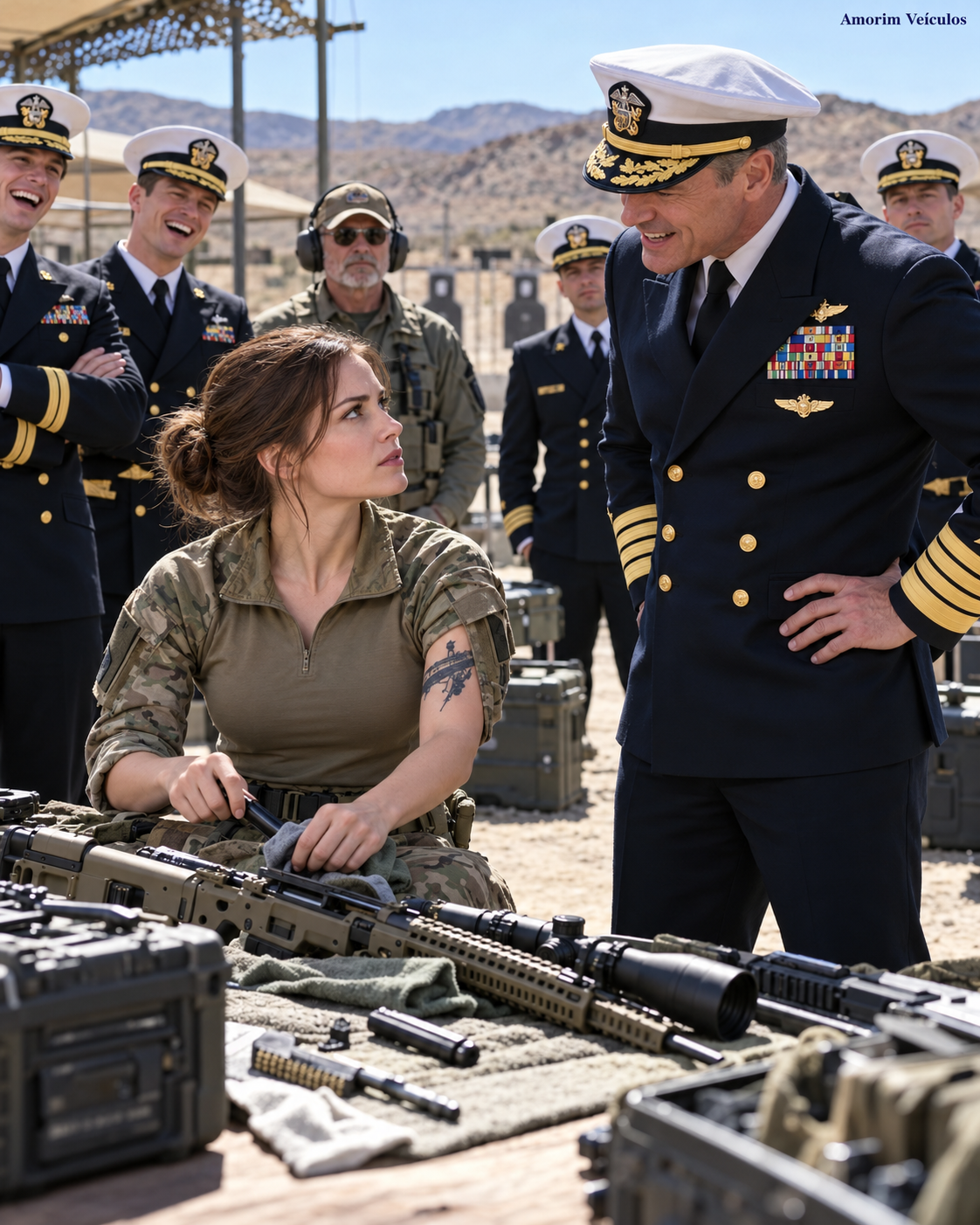
Chapter 6
Kane said nothing.
The next station involved a simulated failure.
Ellis introduced a controlled stoppage, forcing each shooter to clear the rifle before continuing.
Brooks lost more time.
Two others failed to identify the problem correctly.
I cleared mine without thinking.
Not because I was extraordinary.
Because I had learned, a long time ago, that fear made simple tasks complicated.
The best way through a problem was to return to the basics.
By the end of the course, the sun had begun to drop toward the western mountains.
The heat softened, but the dust remained suspended in the air, glowing gold around the range lights.
Ellis collected the score sheets.
Kane waited beside the operations table.
He hadn’t spoken to me in nearly an hour.
That silence was different from the one at the equipment shed.
Before, it had been contemptuous.
Now it was cautious.
When I approached, he said, “You were Army.”
It wasn’t a question.
I removed my ear protection.
“I served in the Army.”
“Sniper section?”
“Yes.”
“Special operations?”
I looked at him.
He answered himself.
“The tattoo.”
“It doesn’t identify a branch.”
“It identifies a unit.”
“Not to everyone.”
“But to me.”
There was something in his voice then.
Not anger.
Recognition.
I had heard that tone before, usually from people who had spent years keeping an old memory locked away and had just heard the key turn.
Kane lowered his voice.
“Where were you stationed in 2014?”
I said nothing.
His face lost some of its color.
Ellis noticed.
“Admiral?”
Kane ignored him.
“Where were you in September of 2014?” he asked again.
The wind moved across the range, lifting a thin veil of sand between us.
I thought of a different desert.
A different kind of heat.
The inside of a transport vehicle.
A radio transmission that had broken into static.
A young officer’s voice asking whether anyone had eyes on the northern ridge.
Some memories faded with time.
Others only learned to hide.
“I was overseas,” I said.
“Everyone was overseas.”
“Not everyone was where I was.”
His eyes fixed on mine.
Then the operations phone rang.
Ellis answered it, listened, and frowned.
“Understood,” he said.
“Send it to my office.”
He hung up and looked at the sealed envelope still resting on the table.
“There’s a second document,” he said.
Kane turned toward him.
“What document?”
“A personnel verification file.”
“From the review board?”